Labdanum Scent: Resinous Leather and Amber Glow
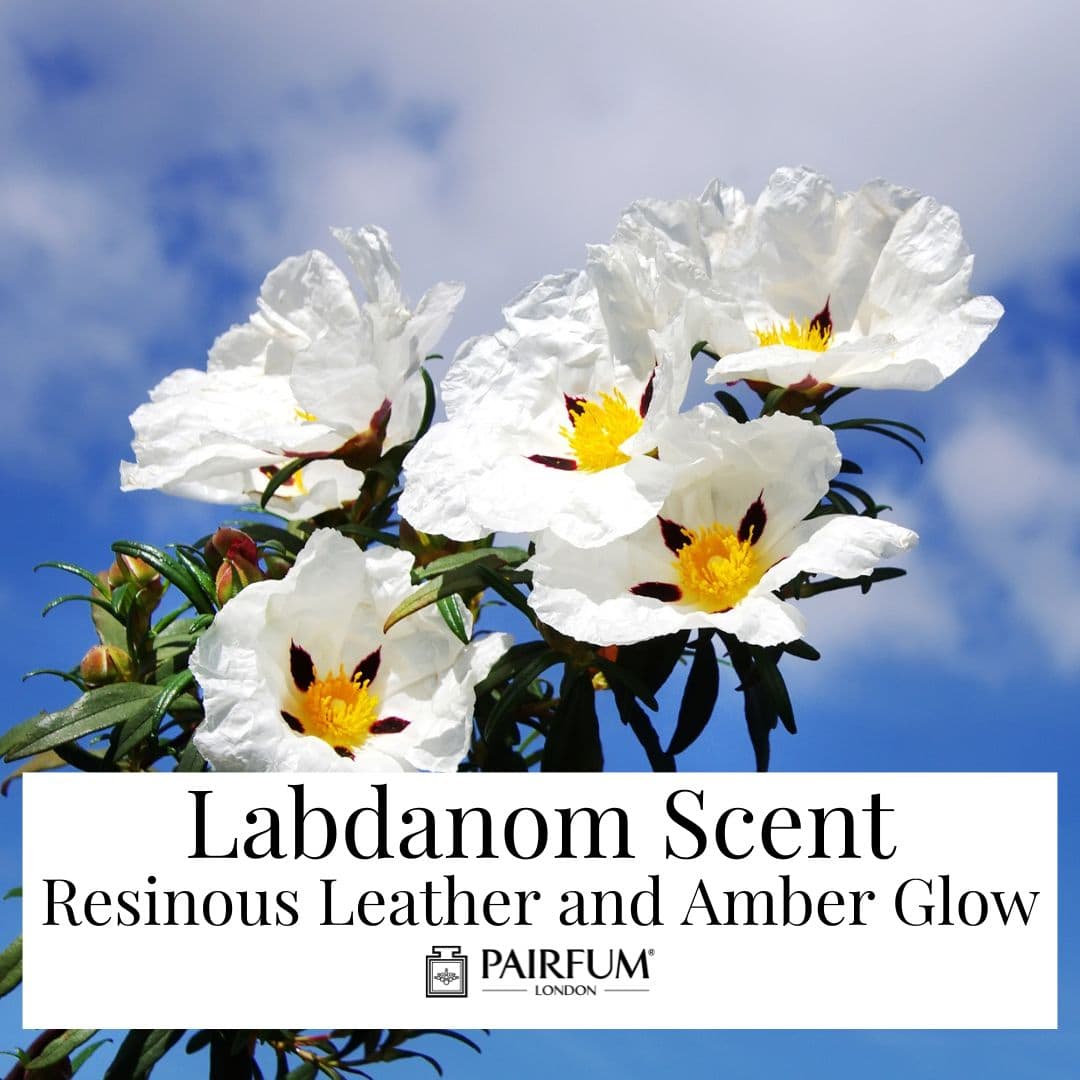
Labdanum is a rich, tenacious, and complex resin sourced from the rock rose plant, which is used extensively in perfumery for its warm, balsamic, and amber-like aroma. It functions as a key, long-lasting base note that features hints of leather, sweet honey, musk, and fruity plum. This resin is essential for creating authentic amber accords as well as classic chypre fragrances.
Labdanum is the note that makes many perfumes feel like a warm embrace, with a resinous glow that lingers on skin and in the air. It smells of sun on dry earth, leather touched by smoke, and a soft amber sweetness that seems to hum quietly in the background. When people talk about a fragrance feeling cosy, sensual or “skin-like”, they are often responding to labdanum, even if they do not yet know its name. This substance is a sticky, dark brown oleoresin whose olfactory properties undoubtedly place it among the most sought-after natural ingredients in the world of perfumery.
At our perfume house, we think of labdanum as one of the great secret ingredients of perfumery, especially in natural eau de parfum and sophisticated home fragrance. In this article, we share a perfumer’s-eye view of this beautiful material, from its unusual origins and extraction methods to the families of perfume it shapes and the iconic creations that would simply not exist without it. We will also explore how it serves as an ethical alternative to animal products while providing unparalleled tenacity to fragrance compositions.
From Goatherds to Haute Parfum
Long before labdanum reached the perfume organs of modern perfumers, it clung to the coats of goats grazing in the Mediterranean hills. As the animals brushed against Cistus shrubs, the sticky resin caught in their beards and fleece, and it was combed out by local goatherds. This dark, fragrant substance was burned as incense, pressed into unguents and offered in rituals, valued for its deep, balsamic aroma. In the island of Crete, some traditionalists still use a tool called a ladanisterion, a wooden instrument with leather straps used to rake the resin from the plants.
Historical texts suggest that labdanum may have been part of Egyptian incense blends such as kyphi, woven into smoke used for ceremony, medicine, and personal adornment. In Ancient Egypt, the resin was so highly prized that it was often linked to the beard of Osiris. It appears in texts dating back to 1500 BCE, and some scholars suggest it may even be the mysterious myrrh mentioned in certain biblical contexts. In Greek and Roman times, it continued to be treasured, associated with both healing and sensuality. Across the Middle East, labdanum appeared in religious perfumes and traditional remedies, always linked to warmth, comfort and spiritual reflection.
When modern perfumery began to flourish, labdanum stepped quietly but firmly into the spotlight. It became a pillar of the classic chypre family, where its resinous richness ties together bright citrus, floral hearts and mossy bases. In amber or oriental perfumes, it bridges the gap between sweet balsams, leathery nuances and incense notes, adding structure and depth to compositions that defined whole eras of fine fragrance.

The Scented World of the Cistus Shrub
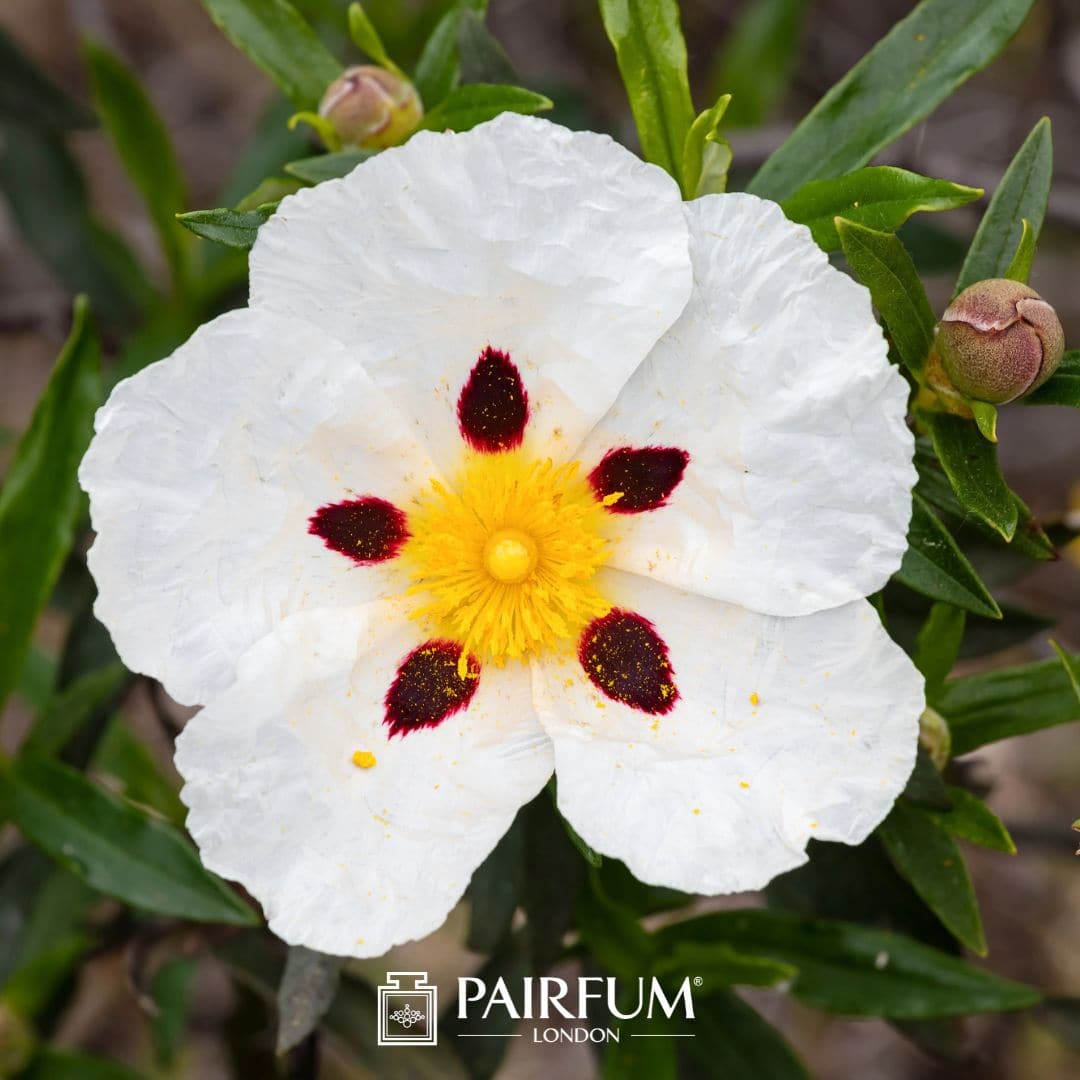
Labdanum comes from several species of Cistus, sun-loving shrubs that thrive in dry Mediterranean climates. Two are especially important in perfumery: Cistus ladanifer, commonly found in Spain and Portugal, and Cistus creticus, associated with Greece and surrounding regions. Rocky soil, strong sun and relatively harsh conditions all shape the character of the resin, concentrating its aromatic compounds. Known colloquially as the Rock Rose, this plant produces white flowers with five petals, often marked with deep crimson spots at the base.
The botanical name for the most common source is Cistus ladaniferus. Different growing areas give labdanum subtly different personalities. Resin from warmer, very dry regions may feel darker, smokier and more leathery. Material from slightly cooler or higher locations can present a touch more herbal brightness or a softer, ambery sweetness. As perfumers, we select the quality that matches the mood we want to create, whether for a natural eau de parfum or a candle that fills a room with warmth.
Once harvested, labdanum can be transformed into several perfumery ingredients. You may come across:
- Labdanum resinoid, thick and inky, with strong leather and smoke tones
- Labdanum absolute, smoother and more refined, emphasising amber and balsamic facets
- Cistus oil, distilled from leaves and twigs, has a drier, more aromatic profile
- Molecularly distilled fractions, isolating particular aspects, such as the honeyed or woody notes
On the blotter, labdanum is complex and evocative: sticky resin, sun-warm herbs, worn leather, pipe tobacco, honeyed amber and a breath of dried fruits and smoke. In both home fragrance and natural eau de parfum, it is a remarkable base note, lending volume, longevity and a sense of quiet luxury.
From Resin to Perfumer’s Palette
The oldest stories of labdanum collection describe leather thongs or combs drawn over Cistus shrubs to pull off the resin, or the famous image of goatherds gathering it from their animals’ coats. While romantic, these methods are labour-intensive and inconsistent, so modern production focuses on more controlled harvesting of the resin directly from the plants.
Today, the sticky raw material is processed through several techniques to create ingredients suitable for perfumery. Solvent extraction yields a concrete, a waxy mass that is then further processed to produce a labdanum absolute, prized for its rich yet workable texture. Steam distillation of the leaves and twigs gives Cistus oil, also known as labdanum essential oil. This essential oil is lighter and harsher, but very useful for drier, more aromatic interpretations of the note. There is also molecular distillation, where parts of the scent are carefully refined or separated to accentuate particular facets.
When we look at labdanum from a sustainability angle, it stands out as a truly renewable gift from the earth. Because these hardy shrubs can be cropped year after year without damage, they are a favourite for artisan and niche perfumery houses. These creators value natural ingredients that maintain a genuine link to the rugged landscapes and age-old crafts of the Mediterranean. Within a natural eau de parfum, labdanum acts as a powerful anchor, providing the fixative qualities needed for a scent to last. In the world of home fragrance, it helps build those rounded, diffusive base accords that make a room feel instantly more elegant and snug.
Extraction Techniques and Olfactive Range
The specific extraction method chosen by a producer will ultimately dictate the personality of the fragrance ingredient. While some purists still seek out the raw, unprocessed labdanum resin for its tactile grit, many of today’s automated technologies allow for a much cleaner, more precise refinement of the labdanum scent. This modern approach ensures that when the material is used in a luxury perfume, it is entirely clear of impurities while still projecting its famous majestic radiance.
In some instances, a labdanum pack of raw materials is sent to laboratories across the United Kingdom and the United States to be tested for its chemical stability. This is vital when creating an essential oil blend where labdanum must interact with carrier oils without separating. Because labdanum is so thick, it requires a skilled hand to blend it into a fragrance without it overpowering the more delicate fragrance notes.
The labdanum profile is often compared to the Midas touch in a bottle, as it has a way of turning simple floral notes into a Midas touch of golden, rich olfactory art. Much like the legend of King Midas, a few drops of labdanum can transform a basic essential oil into something that feels expensive and timeless. It is also highly valued for its ability to mimic ambergris, providing a sweet, earthy, and slightly animalic scent that serves as an ethical alternative to animal-derived substances.
Recognising Labdanum and Enjoying It at Home
Once you know what to look for, you begin to notice labdanum everywhere. In fragrance descriptions, it often appears under base notes, with words like amber, balsamic, resinous, leathery or cistus. When you spray a perfume, wait for the bright top and softer heart to settle. The lingering, slightly smoky amber that feels like a second skin is very often labdanum’s work.
Different personalities may gravitate to labdanum in different ways:
- Lovers of cosy ambers enjoy it in soft, comforting natural eau de parfum
- Chypre enthusiasts appreciate how it ties citrus, flowers and moss together
- Fans of leather fragrances relish its darker, more rugged side
- Incense devotees recognise its smoky, meditative warmth
At home, labdanum adds a cocooning, grown-up character to scented candles, reed diffusers and room sprays. A labdanum-rich candle in the living room makes evenings feel intimate and relaxed. In a bedroom or study, it can bring a sense of calm, like a soft blanket of scent around you.
To get the best from a labdanum-rich natural eau de parfum, a few simple habits help:
- Apply to pulse points, where the warmth of your skin will slowly reveal its facets.
- Allow a little time after spraying before judging the fragrance, as labdanum shines in the base.
- Store your perfume away from direct sunlight and heat to protect the resinous notes.
- Layer with unscented or subtly matching body products so the labdanum accord stays clear rather than muddled.
If you enjoy a coherent scent presence in your home, you can echo your personal fragrance with matching styles in candles or reed diffusers. A leather-amber perfume on skin, paired with a resinous home fragrance, creates a quiet signature that guests often remember long after they leave.
How Perfumers Use Labdanum Today
In the language of perfumery, labdanum is a cornerstone of both amber and chypre families. If you see an amber fragrance, there is a strong chance that labdanum is part of the accord that creates that golden, glowing effect. Blended with vanilla, benzoin and tonka bean, it forms the impression of warm amber, never too sugary, always grounded in a resinous base. In chypres, labdanum joins oakmoss, patchouli and a citrus top, acting like a bridge between sparkling brightness and shadowy woods.
Perfumers also reach for labdanum when building leather, incense or smoky notes. Combined with materials such as birch tar, balsam, frankincense or cade, it can suggest:
- A soft leather jacket, warm from the skin
- Smoky church incense curling through cool stone
- A glowing ember effect in woody, spicy perfumes
Labdanum pairs beautifully with florals too. Rose, iris and jasmine often gain a velvety, more sensual undertone when resting on a labdanum base. Woods like sandalwood and cedar become creamier or deeper, while spices such as cinnamon, clove and saffron knit into its balsamic structure. For natural eau de parfum, this versatility makes labdanum an invaluable tool, and it plays a similar role in candles and reed diffusers, adding lasting warmth and complexity to home scents.
If you wish to view all the different ways this resin is used, you can look toward niche houses that celebrate raw materials. For example, Argos Fragrances and Olfactive Studio often highlight the dark, leathery side of the Cistus plant. Another notable mention is PG81 L'Ombre Fauve, which uses labdanum to create a feral, animalic warmth. Modern designers such as Chanel, Dior, and Guerlain continue to rely on this resin to provide depth to their most famous compositions.
Labdanum Scent in Pairfum London Home Fragrance
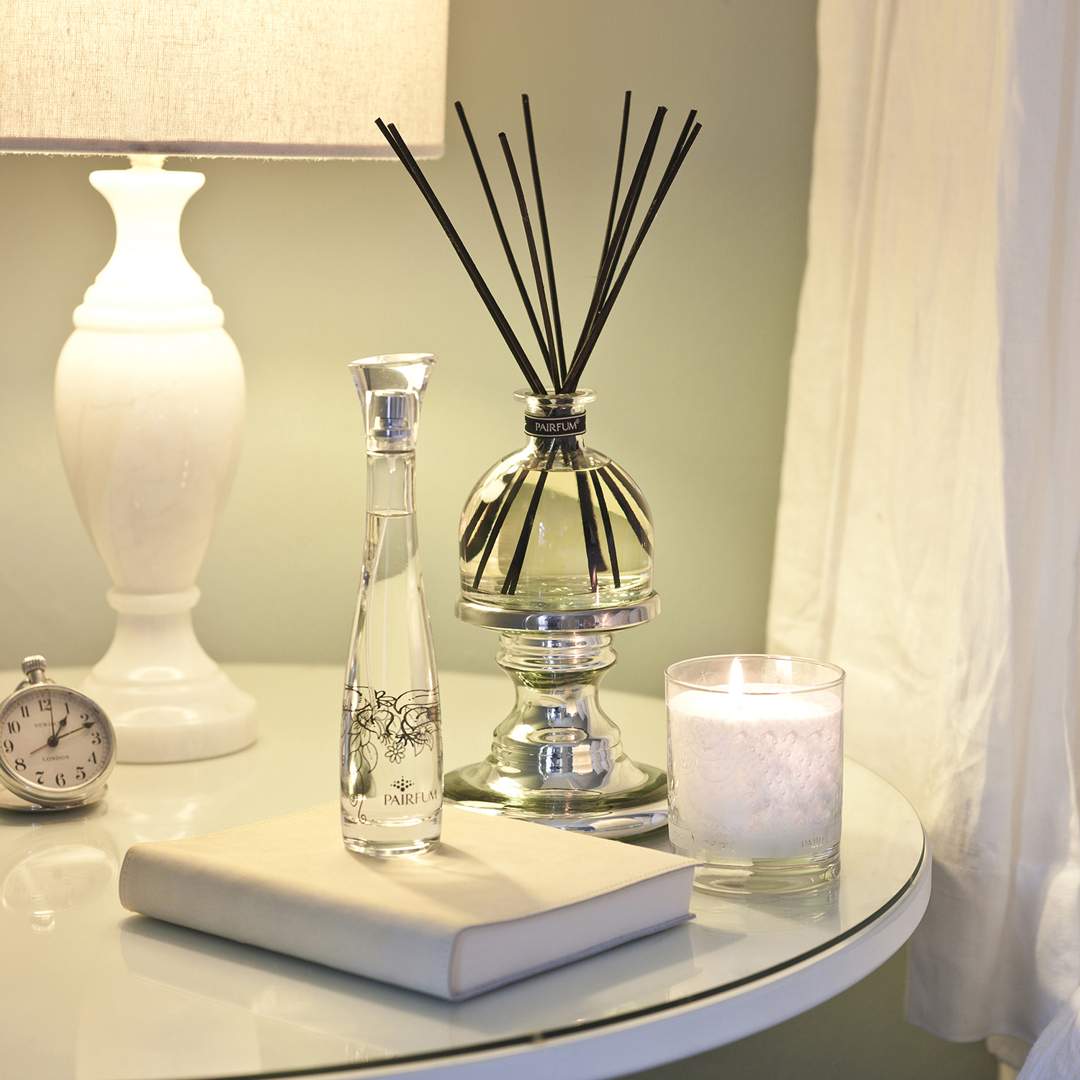
The Flacon Room Spray is an elegant way to instantly elevate your home atmosphere with the same sophistication as a fine fragrance. Housed in a classic glass bottle, this room perfume uses a high-quality, high-pressure mist to disperse scent evenly, allowing the aroma to linger beautifully on home textiles. It is a perfect choice for those who appreciate a luxurious, immediate scent presence that mirrors the depth and character of a personal perfume.
Cognac & Vanilla - Flacon Perfume Room Spray by Pairfum London
The aroma worthy of a Connoisseur: Sherry Aged Oak, rich Bourbon Vanilla, Golden Cognac, Caribbean Patchouli, Amber Benzoin and Ancient Labdanum.
White Sandalwood - Flacon Perfume Room Spray by Pairfum London
A Creamy Sandalwood accord with a hint of Chypre. It includes top notes of Neroli and Lychee, a floral heart of White Jasmine, Violet and Cistus Labdanum, and a base of sun-bleached Cedar, Patchouli, Musk and Tonka Bean.

Experience The Quiet Luxury Of Natural Eau De Parfum Today
Discover how our natural eau de parfum can become your signature, with fragrances that feel as elegant as they are gentle on skin. We craft perfumes in small batches so you can enjoy a scent that feels personal, refined and beautifully balanced. By utilising the finest labdanum resin and high-quality essential oil, we ensure every bottle captures the true essence of the Cistus shrub.
If you would like help choosing the right fragrance for you or a loved one, simply contact us, and we will be delighted to guide you through the world of amber, labdanum, and the many other natural ingredients we use. Discover how this ancient resin bridges the gap between mythology and modern luxury, offering a scent experience that is as enduring as its history.
https://www.pairfum.com/labdanum-in-fragrance-resinous-leather-amber-glow/?fsp_sid=15897
#ARTISANPERFUMERSOFLONDON #INSTAPERFUME #LABDANUM #LABDANUMSCENT #NATURALFRAGRANCE #NICHEPERFUME #PERFUMELOVERS #WHITEFLORALFRAGRANCE


Comments
Post a Comment