Macaroon in Perfumes: Sweet Coconut Gourmand Charm
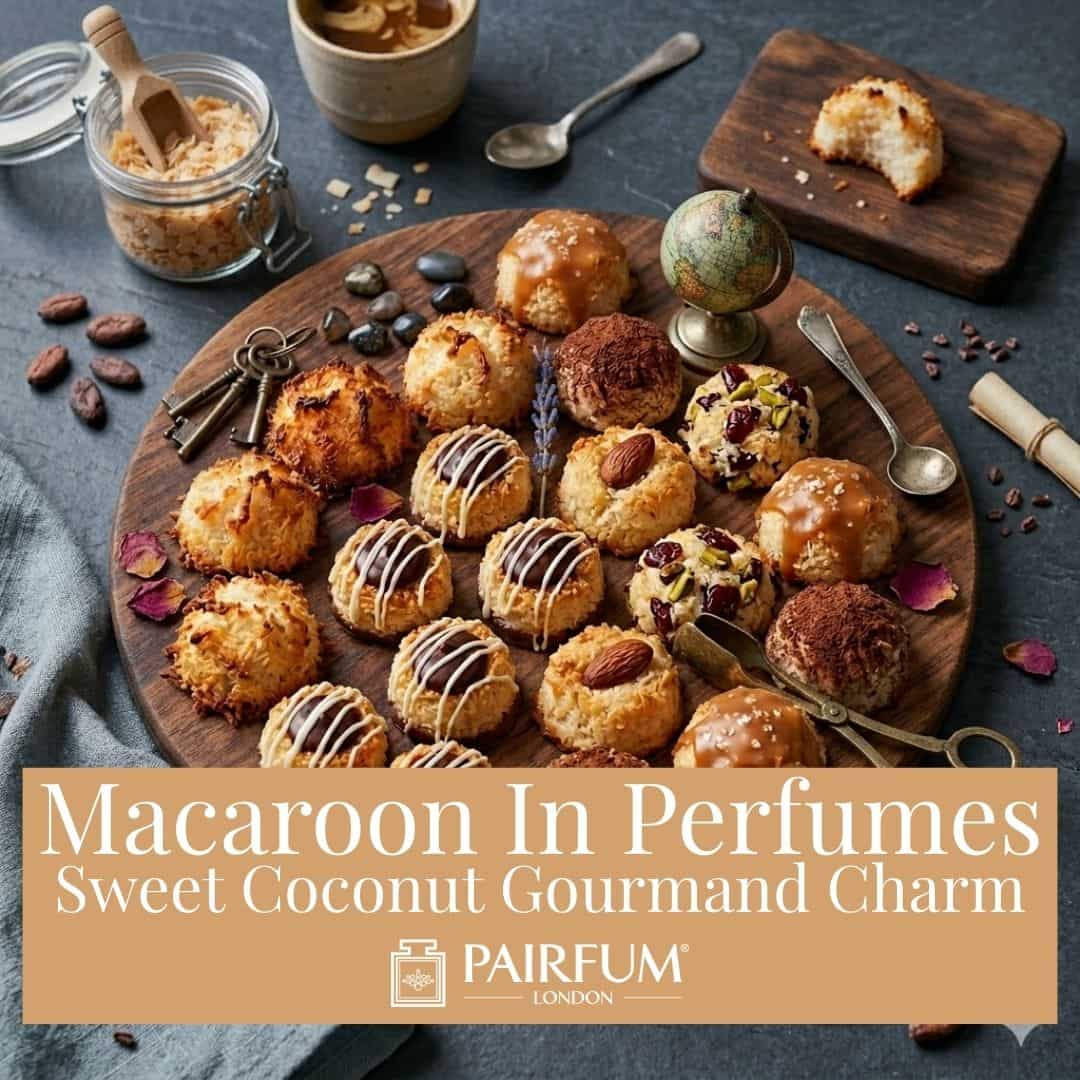
A macaroon is a dense, chewy cookie primarily crafted from shredded coconut, egg white, and sugar, and is often dipped in chocolate. These treats differ from the French macaron (spelt with one 'o'), which is a delicate, meringue-based sandwich made with ground almond. While coconut macaroons are typically rustic and packed with tropical flavour, the French macaron is smooth, colourful, and light.
There’s something wonderfully soft about the macaroon note in perfumes. It brings to mind the sweet crunch of coconut, the warmth of baked treats, and that gentle, toasted charm that feels comforting without being too sugary. As winter begins to ease into early spring, these kinds of aromas seem to suit the change in seasons perfectly.
The macaroon note brings its familiar coconut touch into fragrances in a way that adds depth and creaminess without weighing everything down. It doesn’t shout. It smooths. Whether tucked into the heart or base of a perfume, it creates an atmosphere that feels cosy and welcoming. And while it borrows from something edible, it stays grown-up, wearable, and wonderfully suited to perfumes that want to be memorable without being loud.
A Sweet History: How the Macaroon Became a Perfume Favourite
Gourmand perfumes have always had a link to comfort. They began showing up in full force in the late 20th century, led by vanilla and chocolate notes that captured the feeling of desserts without turning perfume into food. As the gourmand style grew, perfumers started to reach for other familiar treats to build new perfume profiles.
The macaroon note started to show up not just as a nod to coconut, but as a richer, fuller element made up of coconut, almond, and baked facets. Historically, these treats have deep roots; the name stems from the Italian word maccarone, meaning a fine paste. While the French macaron rose to fame in Parisian tea salons like Ladurée during the 20th century, the earlier versions were simple almond meringue biscuits. It was the introduction of shredded coconut in the late 1800s that transformed the recipe into the dense, chewy coconut macaroons we recognise today.
We saw this evolution mirrored in the move toward perfumes that felt personal and emotional. These weren’t perfumes meant to impress from a distance. They were the kind of people who wore clothes and perfume to feel good. And that’s where macaroon found its place, quietly adding warmth and sugar while helping a perfume feel holding and familiar.
Recreating the Aroma: How Perfumers Capture the Macaroon Note
Unlike some natural perfume ingredients, there’s no plant or flower that gives us a true macaroon oil. Instead, perfumers build the note piece by piece, using a mix of both natural extracts and aroma molecules. Typical components include:
- Coconut milk or shredded coconut accords for the sweet, tropical base
- Almond oils or tonka bean to bring a nutty tone
- Soft vanilla and sugar notes to round out the sweetness
When layered in the right way, these ingredients create a perfume note that smells gently creamy and toasted, like the real treat it’s inspired by. It usually appears in the heart or base of a fragrance, places where it can linger on the skin and offer its cosy softness all day. And because it’s a warm note, it blends seamlessly into the kind of perfumes made for cuddling up, whether that’s on chilly days or early spring evenings.
The Culinary Inspiration: From Baking Tray to Fragrance Bottle
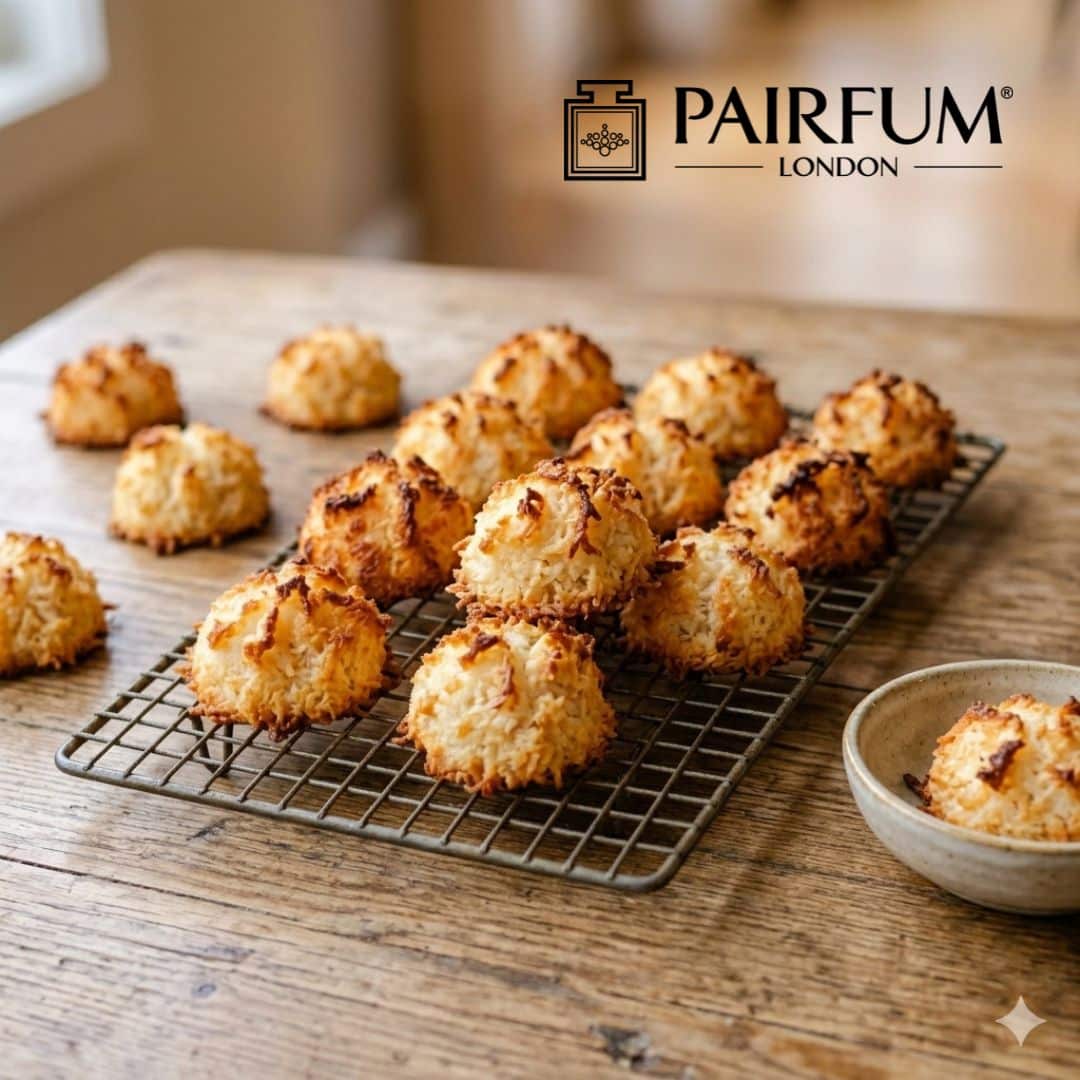
To understand why macaroons smell so divine, one must look at the baking process itself. A classic coconut macaroon is a simple yet indulgent sweet treat. The traditional recipe involves a mixture of egg white beaten until it forms soft peaks, eventually reaching stiff peaks as sugar is folded in. Unlike the delicate French macaron, which relies on ground almond and a smooth macaron shell, the coconut variety is rugged and hearty.
In a kitchen, a baking tray lined with parchment is filled with spoonfuls of batter. As they sit on the baking sheet, the edges begin to caramelise. This toasted flavour is exactly what perfumers try to replicate. While some may confuse them with the French macaroon (often spelt macaron), the scent profile we often find in gourmand perfumes is closer to the dense, golden coconut macaroons found in British bakeries.
Even a Scottish macaroon has its own unique profile, famously invented by John Justice Lees in 1931. This version traditionally uses a surprising ingredient like mashed potato or boiled potato mixed with an abundance of icing sugar to create a thick fondant. It is then dipped in chocolate and rolled in coconut. This specific combination of earthy potato and intense sweetness creates a very different olfactory profile, one that is dense, rich, and nostalgic.
Mastering the Texture: Sugar, Butter, and Cream
The olfactory "texture" of a macaroon perfume comes from simulating the weight of the ingredients. To mimic the density of a macaron recipe, perfumers use synthetic notes that evoke butter and heavy cream. Just as a baker uses an electric mixer to combine caster sugar and almond extract at room temperature, a perfumer carefully balances superfine sugar notes with darker elements.
When you think of a high-quality chocolate macaroon, you imagine the snap of dark chocolate against a soft centre. In scent, this is achieved by layering cocoa accords over a sugar and almond mixture. The goal is to capture the essence of the food without the stickiness. This involves avoiding the trapped air bubbles of a light meringue and focusing instead on the "chewiness" of the coconut and icing sugar blend. Experts like Sally’s Baking Addiction highlight that using the right sugar and avoiding fat in the egg white is vital for the bake; similarly, a perfumer must ensure no single note "collapses" the scent's structure.
Blending with Character: How Macaroon Pairs with Other Notes
One of the nicest things about the macaroon note is how adaptable it is. It doesn’t take over, which means it’s great at blending and giving structure to many different combinations.
- It holds very well with other warm notes like tonka bean, sandalwood, and amber
- It melts into floral notes like jasmine or tiaré to create soft, tropical-style perfumes
- It contrasts nicely with hints of citrus or green notes, offering sugar without losing freshness
In niche perfumes, where character and contrast matter more than just sweetness, macaroon is often used to round out sharper or more airy smells. It can take something cold or dry and soften the edges just enough to make it feel inviting.
We’ve seen perfumers use it in both traditional gourmand blends and more inventive pairings. Sometimes it appears beside sea breeze notes or smoky woods, showing that coconut or vanilla doesn’t need to stay in the dessert category. When used with a light touch, it simply brings calm.
The Art of the Confectioner and the Perfumer
There is a certain theatricality to baking that mirrors the art of scent. Think of the Great British Bake Off, where contestants carefully prepare a piping bag to ensure every macaroon on the tray is uniform. They watch the selection results of their hard work as the prepared baking sheet comes out of the oven.
Similarly, a perfumer must ensure their mixture is balanced. If there is too much confectioners sugar or powdered sugar in the accord, the perfume becomes cloying. If the almond is too strong, it can smell medicinal. However, when the caster sugar and butter notes are handled with precision, the result is a fragrance that smells like the most refined macaroons in the world.
Soft and Cosy: Why Does Macaroon Work for the Colder Season
Late winter into early March brings a change in mood. We start looking forward to lighter days and milder weather, but it’s still chilly enough to want something warming on the skin. Macaroon gives that gentle warmth in a way that feels perfectly timed.
This is the season when heavy perfumes can start to feel too much, but many spring perfumes feel a little too clean or airy. A macaroon note gives the best of both sides. It’s cushiony like soft layers on a cool day, but doesn’t weigh the whole perfume down.
- It softens perfumes that rely on sharp greens or citrus
- It makes floral blends feel more creamy and smooth
- It warms perfumes with woody bases without making them feel too dark
As the weather shifts, we often want perfumes that feel like an easy comfort. The macaroon note does exactly that; it creates a sense of closeness and ease that feels just right for this time of year.
Find Your Next Iconic Fragrance With Pairfum London
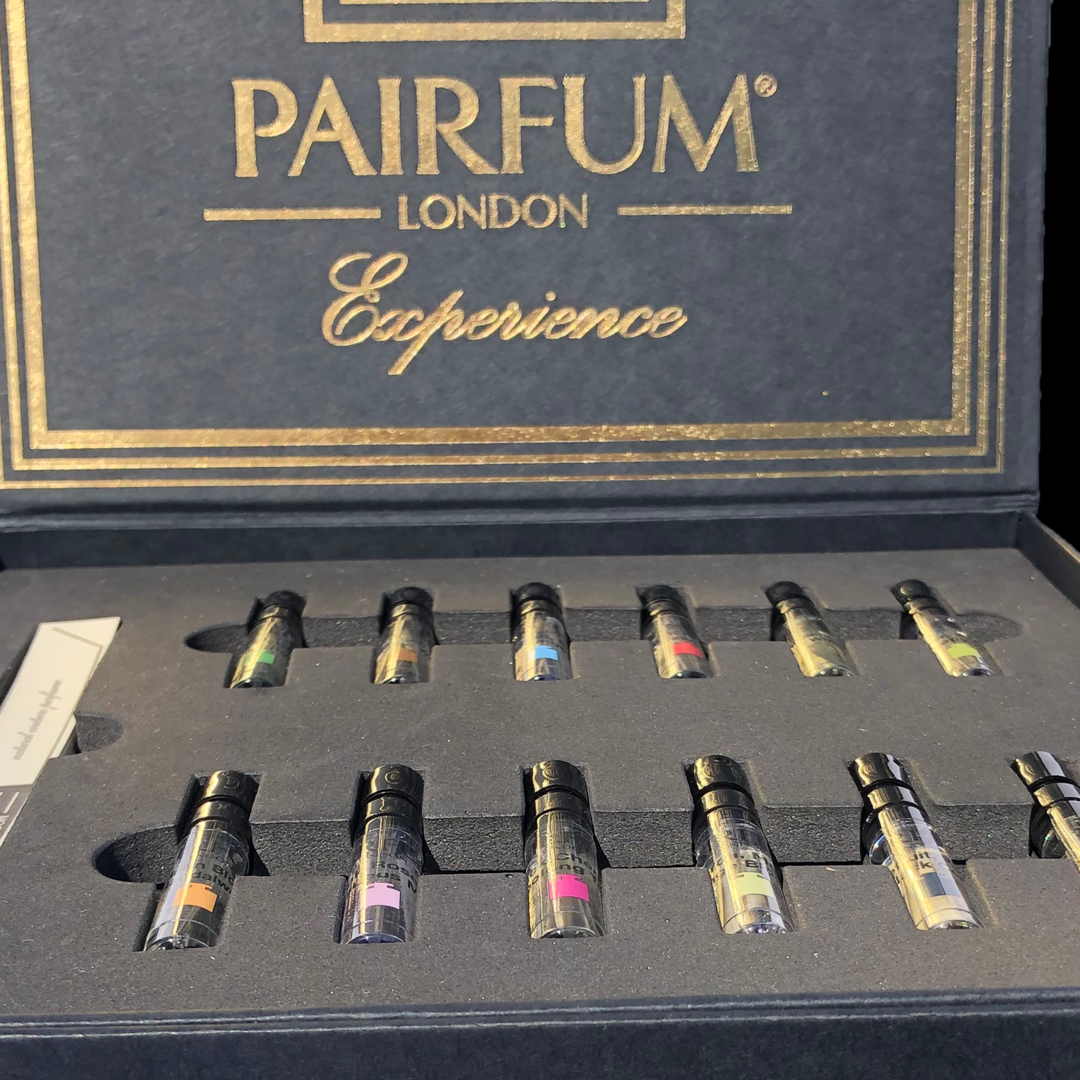
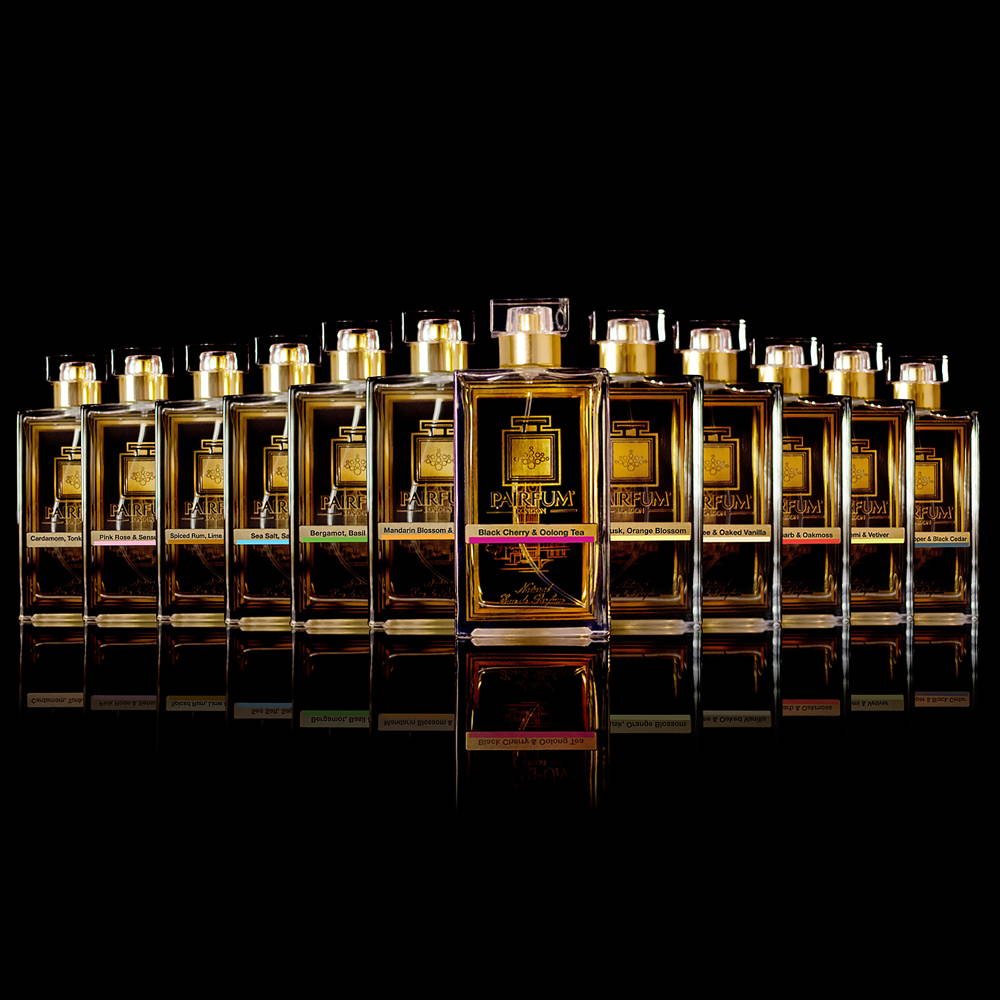
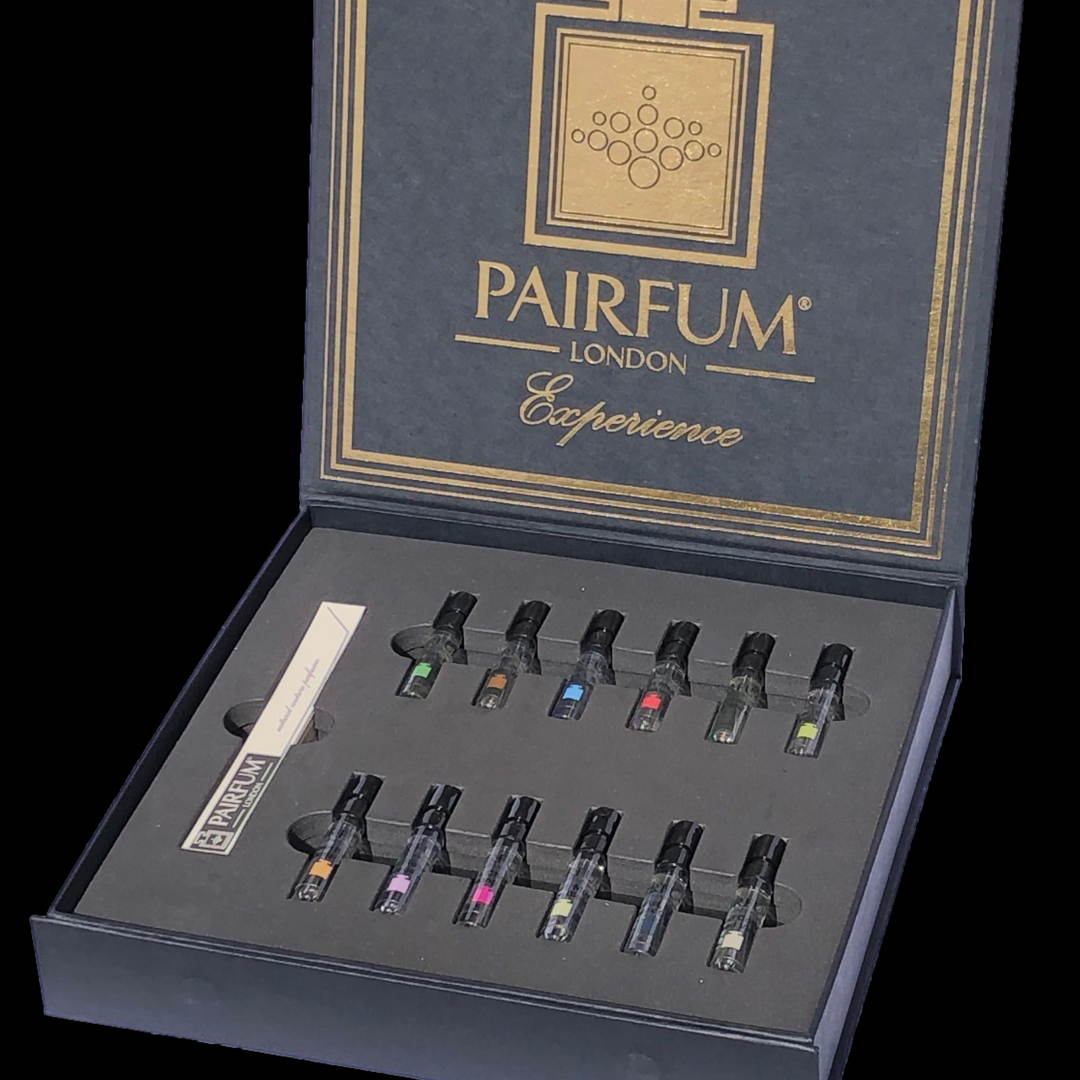
Finding the perfect gourmand scent is a deeply personal journey, especially when looking for those subtle, toasted notes of macaroon and vanilla that truly resonate with your skin chemistry. Rather than guessing at a crowded perfume counter, the Fragrance Library Perfume Experience Box allows you to explore sophisticated aromas in the comfort of your own home. It is the ideal way to discover how a sweet treat of a scent evolves from the first spray to the warm, lingering base notes, ensuring you find a fragrance that feels like a natural extension of your own style.
Fragrance Library Perfume Experience Box by Pairfum London
This beautifully presented collection features twelve 2ml bottles of Intense Eau de Parfum, providing approximately 100 sprays per bottle or enough for a two-week trial of each unique scent. The set includes 50 professional smelling strips for expert sampling and is crafted using natural, organic essential oils and a biodegradable alcohol base derived from sugar. As a 100% vegan and cruelty-free product handmade in the United Kingdom, it offers a risk-free way to sample niche luxury, with the full cost of the box refundable when you upgrade to a full-sized flacon.
A Lasting Treat: When Sweetness Feels Grown-Up
Sweetness in perfume sometimes gets a bad name, but there’s a difference between sugar overload and well-made gourmand warmth. What keeps macaroon on the grown-up side is how it’s used to support, not to lead. When layered thoughtfully, it gives perfume a soft texture and a fuller shape.
We keep seeing this note appear in both familiar, comforting perfumes and in newer niche creations. It bridges the gap between everyday favourite and something just a bit unexpected. That’s probably why macaroons never quite go out of style. They don't try too hard; they just work. And sometimes, that’s exactly what perfume should do. Experience the comforting warmth of macaroon and dark chocolate undertones, and discover how a simple recipe of notes can transform your daily flavour profile into something truly sophisticated.
https://www.pairfum.com/macaroon-in-perfumes-sweet-coconut-gourmand-charm/?fsp_sid=16794
#ARTISANPERFUMERSOFLONDON #FRAGRANCE #INSTAPERFUME #LONDON #LOVE #MACAROON #MACAROONS #MACAROONSMELL #NATURAL #NICHE #PERFUME #PERFUMELOVERS #SCENT


Comments
Post a Comment