Chestnut in Perfumes: Roasted Warmth and Gourmand Comfort
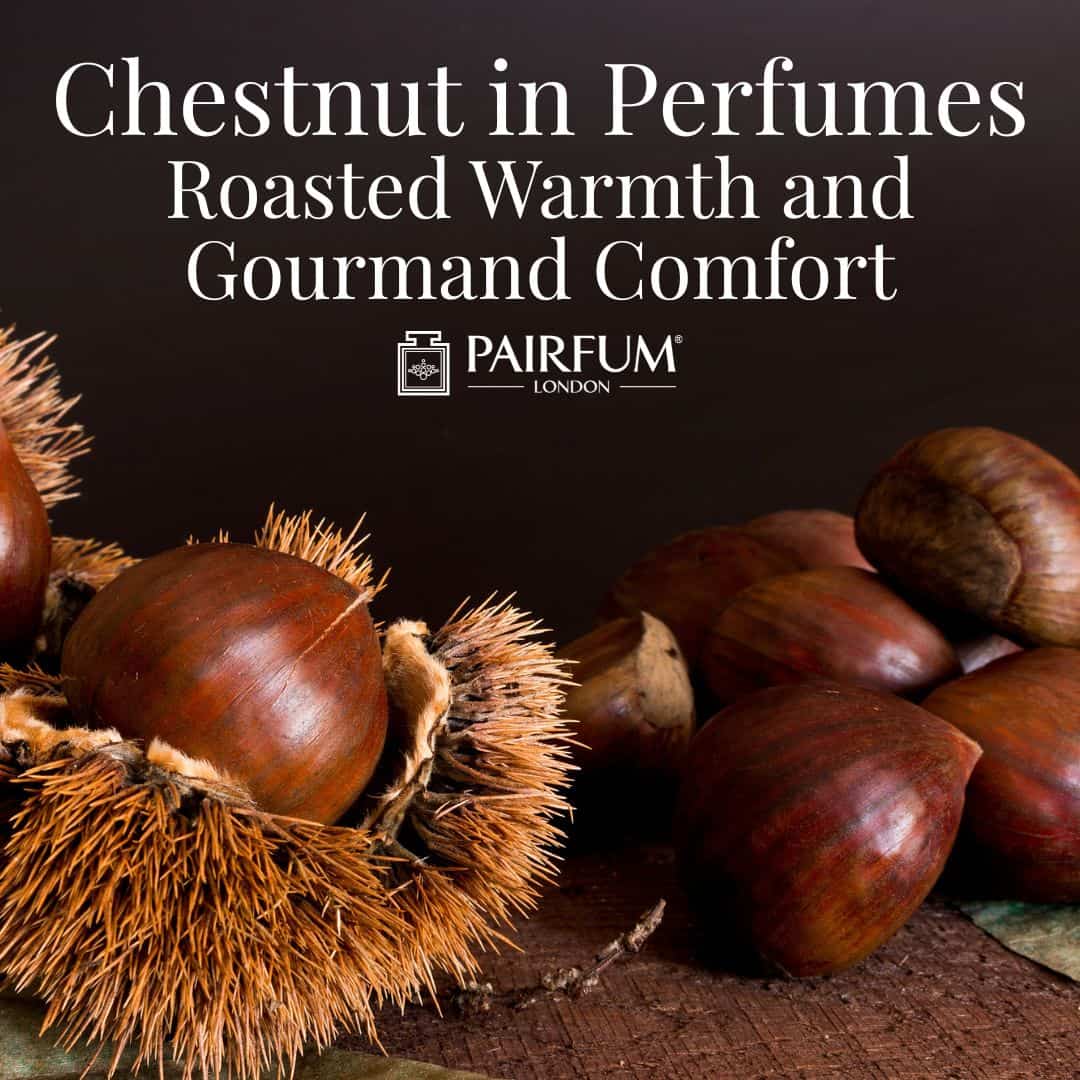
A chestnut is an edible brown nut that grows on trees belonging to the genus Castanea. It sits inside a sharply spiked shell and has been gathered, cooked and eaten for centuries. In the English language, chestnut works as both a noun and a description. It refers to the nut itself, a familiar brown colour, and even an idea that has been repeated often enough to feel well-worn. The word comes to us through Middle English, which hints at just how long chestnuts have been part of everyday life.
There is also a distinction that matters. A true chestnut should not be confused with the poisonous horse chestnut, commonly known as a conker. Edible chestnuts are enjoyed roasted in winter, ground into chestnut flour, or blended into purées for cooking. They are naturally high in fibre and minerals and have long been valued as both nourishing and filling.
When the weather cools and routines slow, certain scents begin to feel right. Chestnut is one of them. Its warmth is gentle rather than sweet, familiar rather than showy. It often brings to mind food cooking quietly nearby.
Compared with bright fruit notes or sugary gourmands, chestnut stays calm. It settles into a fragrance and stays there. Over time, this quality has given chestnut a steady place in niche and seasonal perfumery, especially during autumn and winter. The sections below explore where chestnut comes from, how it appears in fragrance, and why it still resonates.
What Is a Chestnut?
A chestnut is both a fruit and a nut, produced by a tree that has shaped landscapes and diets for thousands of years. Beyond food, the word chestnut is used to describe colour, texture and atmosphere, often linked to wood, age and autumn light.
True chestnuts grow on chestnut trees within the genus Castanea. These are long-lived fruit trees, found in cultivated land and natural woodland. A mature chestnut tree is usually a tall, broad tree. It is a deciduous tree, shedding its leaves each year. The rough bark, wide canopy and long leaf shape make it easy to recognise once you know it.

The Chestnut Tree in Ecology and Landscape
The chestnut tree has always been useful beyond the harvest of chestnuts. As a deciduous tree, it improves soil health through the steady fall of leaves each year. This supports fungi, insects and wildlife within woodland habitats. Chestnut trees are also tolerant of poorer soils, which allows them to grow where other fruit trees struggle.
Historically, many sweet chestnut tree stands were coppiced. This practice encouraged new shoots from the base of the tree, producing poles for fencing, fuel and building. Over time, these managed areas became a familiar feature of parts of England and mainland Europe. Mature chestnut trees still shape local landscapes today.
Flowering, Pollination, and the Iconic Fruit
In early summer, sweet chestnut produces pale flower spikes rich in pollen. These flowers attract bees and other insects. Pollination happens through both wind and insects, which helps chestnut trees succeed in varied environments.
The fruit forms inside a spiny burr. When ripe, the burr opens and releases the chestnuts, which fall to the ground in autumn. Each nut contains a high level of starch. This sets chestnuts apart from oil-rich nuts and explains their soft texture once cooked. These same qualities influence how perfumers imagine chestnut as a scent.
Sweet Chestnut and Horse Chestnut Explained
When talking about chestnuts, precision matters. The sweet chestnut, botanically known as Castanea sativa, is the edible species. It is also called the European chestnut or Spanish chestnut and has been cultivated for centuries.
The horse chestnut is different. Its seeds look similar but are toxic. Horse chestnut is grown as an ornamental tree, not for food or fragrance. Only the sweet chestnut is relevant to perfumery.
Chestnut Trees Around the World
Several chestnut species grow across Europe, Asia and North America.
In Europe, Castanea sativa, the European chestnut, is most common. In Asia, the Chinese chestnut, known scientifically as C mollissima, and the Japanese chestnut are widely cultivated and valued for their disease resistance.
In North America, the story of the American chestnut is often cited. The American chestnut tree, or Castanea dentata, once dominated vast forests. The arrival of chestnut blight, a fungal disease, changed everything. This single disease devastated populations and permanently altered ecosystems.
From Tree to Table: How Chestnuts Are Prepared
Chestnuts behave differently from many other nuts. They are low in fat and high in starch. A raw chestnut is firm and bitter, which is why chestnuts are almost always cooked.
Preparation methods include roasting, boiling and drying. Roasted chestnuts are perhaps the most familiar, especially in winter markets. Many people also roast chestnuts at home. After cooking, the shells are removed, leaving peeled chestnuts.
Other forms include fresh chestnuts, fresh chestnut, cooked chestnuts, and dried chestnut. Traditional recipes use chestnut flour in breads and cakes. Desserts such as Mont Blanc rely on smooth chestnut purée, often finished with cream and candied chestnut. These foods strongly shape how chestnut is imagined in fragrance.
Chestnut in Culture and Daily Life
Across Europe, chestnuts appear in everyday traditions. Autumn farm walks often involve collecting fallen chestnuts. An old chestnut tree may serve as a familiar meeting point or landmark. In Britain, dehusked Kentish cobnuts are sometimes compared with sweet chestnut, showing how closely the nut is woven into rural culture.
These experiences give chestnut emotional weight as a scent, linking it to warmth, food and continuity.

A Warm Glimpse into the Past: The Origins of Chestnut in Perfumery
Chestnut found its way into perfumery through memory rather than extraction. For generations, roasted chestnuts scented streets and markets during colder months. The aroma became tied to home, warmth and routine.
Early perfumers recognised this connection. As gourmand fragrances grew in popularity, chestnut offered warmth without excess sweetness. In older traditions, nut-based aromas were believed to calm the senses, which helped chestnut take its place in fragrance.
What Kind of Chestnut Is Used?
Only the sweet chestnut is used as inspiration in perfumery, most often referencing Castanea sativa. The nut itself does not produce a strong extract.
Because of this, perfumers rely on constructed accords that suggest sweet chestnut rather than recreate it directly.
How Perfumers Use Chestnut in Fragrance
In perfume, chestnut usually appears in the heart or base. It adds warmth and staying power rather than brightness.
Its character is creamy, gently toasted and softly woody, echoing the chestnut tree itself. Chestnut pairs naturally with vanilla, woods, leather and spices.
The Art of Extraction: How Chestnut Makes Its Way into Perfume
Chestnut does not give up its scent easily. Neither nut nor shell distils well.
Instead, perfumers build accords using woody notes, creamy facets inspired by chestnut purée, and faint smoky tones that recall roasted chestnuts. The aim is to suggest a feeling rather than capture a literal smell.

Chestnut-Infused Icons: Popular Perfumes Featuring Chestnut
Chestnut appears in many niche and luxury perfumes, particularly those aimed at colder months. Each uses it a little differently:
- Some perfumes let chestnut take centre stage, combining it with coffee, cream, or vanilla for a full gourmand feel
- Others blend it into smoky or woody profiles to add a touch of sweetness and cosiness
- A few modern creations play with spiced chestnut, combining it with warm spices and dark fruit for a more mysterious effect
In autumn and winter releases, chestnut is not just a seasonal extra. It fills a genuine gap, giving depth and balance to perfumes that want to feel grounded but soft, rich but not overpowering.
Home Fragrance Heart Notes With Pairfum London
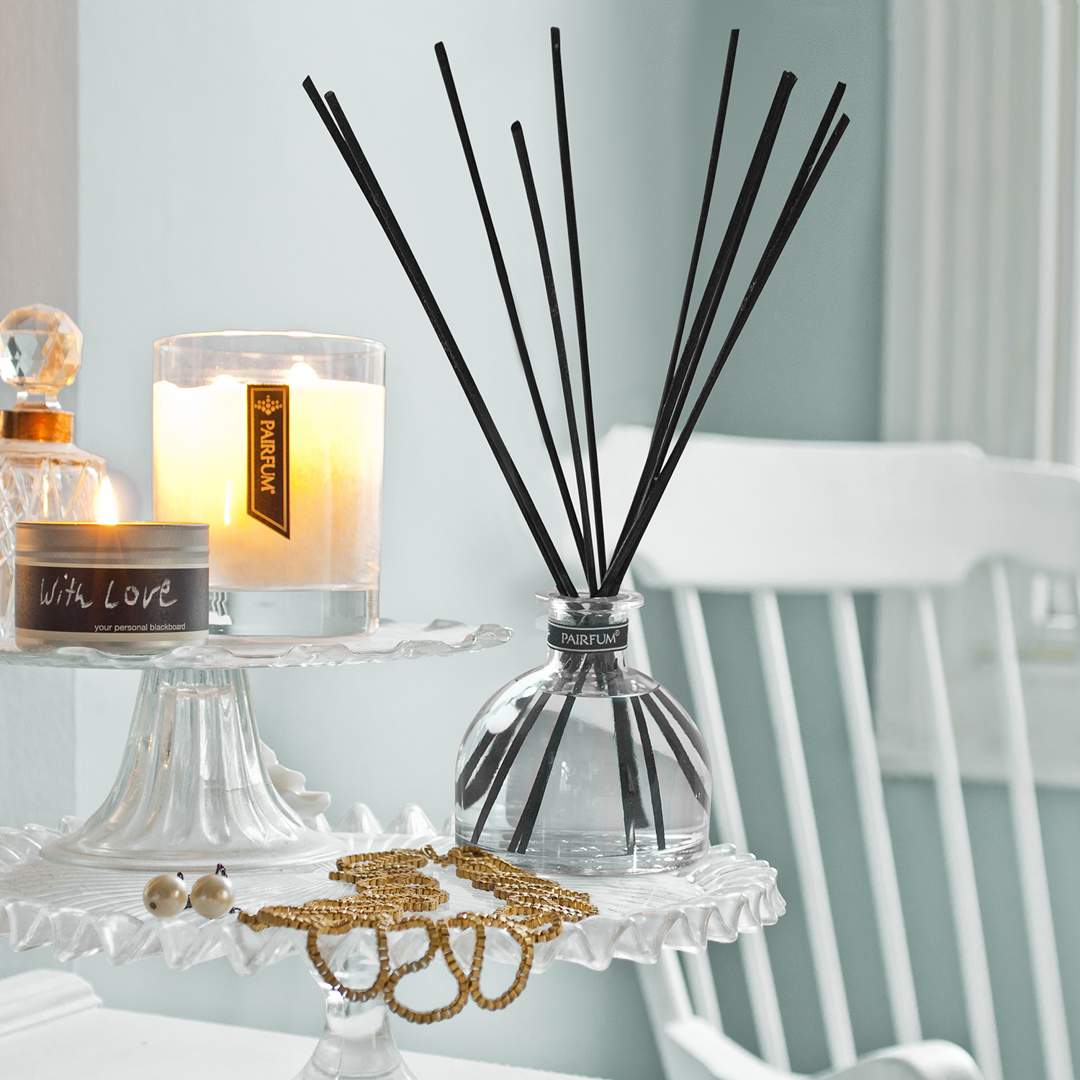
To bring chestnut-inspired warmth into the home, the Large Snow Crystal Perfumed Candles offer an inviting option. Designed for slower seasons, these candles create a calm, enveloping atmosphere with roasted, nutty comfort. Their generous size and refined presence suit evenings spent indoors.
Rich Spices – Large Snow Crystal Candle by Pairfum London
This fragrance opens with Pomegranate and Cranberry, moves into a warming heart of Chestnut, Nutmeg, Cinnamon and Clove, and settles into Vanilla Pods with dried fruits such as Figs, Dates and Persimmons.
Conclusion:
Fragrance is closely tied to memory. Chestnuts often bring to mind winter evenings, shared food and familiar rituals.
Chestnut never tries to dominate. It sits quietly in a composition, offering comfort without insistence. That restraint is why perfumers return to sweet chestnut again and again. Rooted in nature and shaped by culture, it remains a reassuring presence when the air turns cold.
https://www.pairfum.com/chestnut-in-perfumes-roasted-warmth-gourmand-comfort/?fsp_sid=13404
#ARTISANPERFUMERSOFLONDON #AUTUMNSCENT #CHESTNUTFRAGRANCE #GOURMANDPERFUME #NICHEPERFUMERY #PERFUMELOVERS #PERFUMENOTES #WARMFRAGRANCE


Comments
Post a Comment