Bluebell in Perfumes: Dewy Woodland Freshness
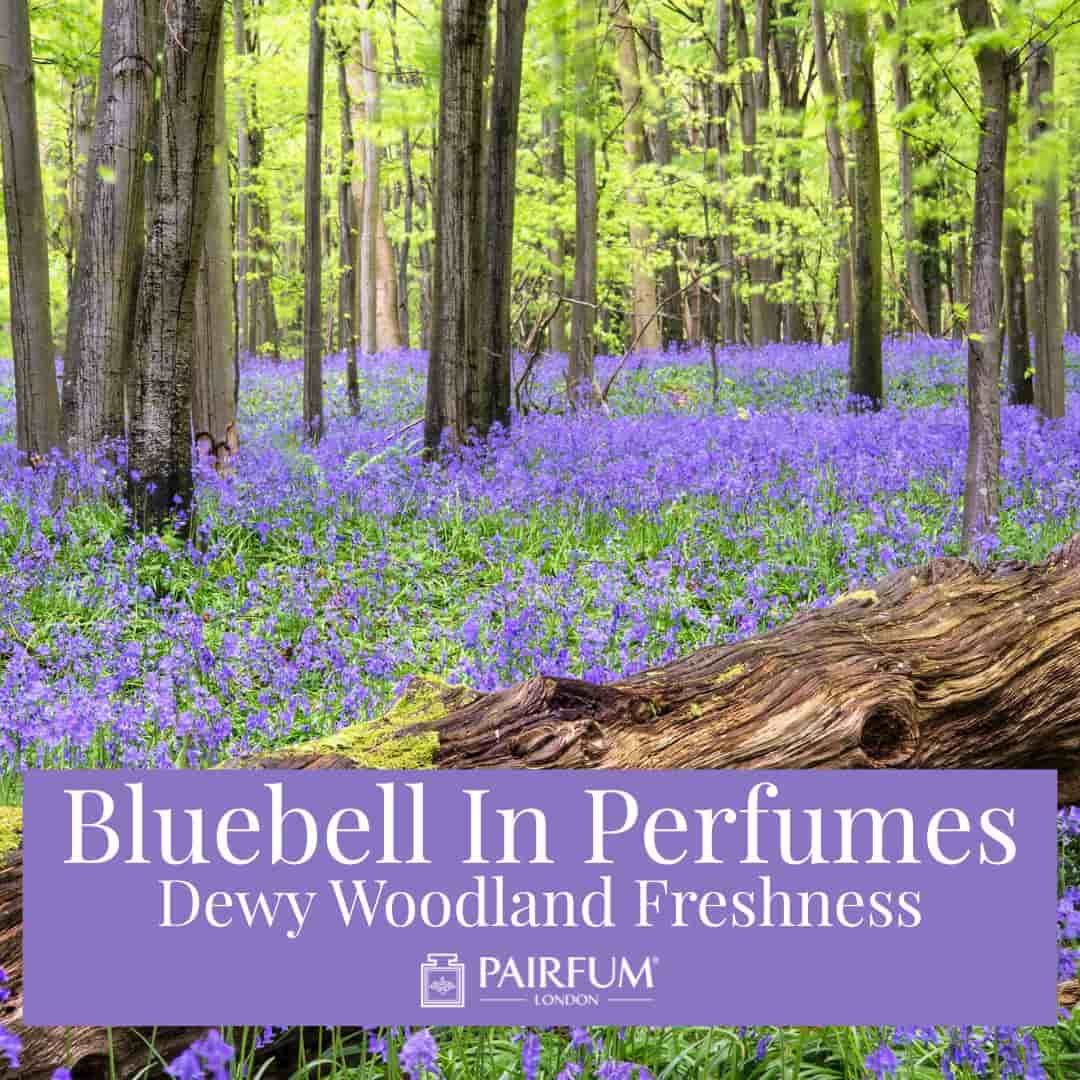
A bluebell is a classic woodland flower (Hyacinthoides non-scripta) known for its nodding, violet-blue, bell-shaped blossoms that carpet the forest floor in spring. These plants effectively attract pollinators and bees before the emerging tree leaves block the sun. While native bluebell populations are common across the UK and Europe, growing from a deep bluebell bulb, they are increasingly threatened by habitat loss and the spread of the Spanish bluebell, a similar species which is distinguished by its stiffer, upright stem.
There is something inherently refreshing about the aroma of bluebell in perfumes. It brings to mind soft moss underfoot and sunlight filtering through trees. That quiet, green air you find on a spring morning in a shaded woodland lives in the memory of this flower. For many, the sight of blue carpets across a forest is a source of springtime joy, a seasonal shift that signals the end of winter. This iconic scene is particularly significant in the United Kingdom, which is home to almost half of the global population of this species.
Bluebell has a long and gentle story in perfumery. It is not a bold floral, but that is what makes it stand out. Its presence is subtle, leafy, and slightly sweet. Over time, it found its place in delicate blends where fresh, airy notes matter just as much as florals. We take a closer look at what gives bluebell its charm, where it grows, and how its unique character shapes the essence of some of our favourite perfumes.
A Glimpse Into the History of Bluebell in Fragrance
The bluebell flower, renowned for its soft violet-blue colour and carpet-like blooms in the British countryside, has always evoked a sense of calm. For many here in the UK, it is a sign of early spring and a reminder of nature’s quiet beauty. Historically, this woodland flower was even linked to ancient myths. In Greek mythology, the flower was said to have sprung from the blood of Prince Hyacinthus, whose death was mourned by the god Apollo. The tears of the god were said to have marked the petals with the letters of grief, though the botanical name non-scripta actually means unlettered. This name was given specifically to distinguish the native bluebell from the classical hyacinth of myth.
Beyond folklore, the plant has a storied history of practical use. During the Elizabethan era, the starch-rich juice from the bluebell bulb was used to stiffen the elaborate ruff collars fashionable at the time. In even earlier periods, the sticky mucilage from the bulbs served as a natural glue for bookbinding and for attaching feathers to the shafts of arrows.
We began seeing bluebell used more widely in perfumes during the 20th century. Before that, it was mostly admired in a garden or wild woodland. Its aroma was hard to capture, but perfumers saw the potential. This flower held a special kind of stillness, a green freshness that was not too sweet or too strong. It had its own rhythm. As niche perfume grew in popularity, Bluebell found more space to shine. Its delicate nature fits well within compositions that moved away from heavy florals.

Where Bluebell Grows and How It Smells
Bluebells thrive naturally across woodland areas throughout the United Kingdom. If you have walked through a forest trail in early spring, chances are you have seen them, rows of violet-blue flowers growing in quiet, shaded parts of the woods. These flowers do not bloom for long, but when they do, they transform the woodland floor. Botanically, the common bluebell is called Hyacinthoides non-scripta. It is a protected species in the wild, meaning you can look but not touch. Picking or uprooting them is a criminal offence under the Wildlife and Countryside Act 1981.
The natural aroma of bluebell is soft and layered. It has a quiet green feel, similar to fresh leaves or damp flower petals. There is a gentle sweetness, but not the sugary kind. It leans more toward watery florals, with a light, earthy edge that makes it feel more like nature and less like a bouquet from a vase. In a garden setting, people often try to cultivate this plant to recreate that wild magic at home. However, the native bluebell is currently facing a challenge from the Spanish bluebell (Hyacinthoides hispanica). This species was introduced as a garden plant, but is much more vigorous than our native English bluebell.
Species Information and Identification
When looking for information on how to tell these plants apart, species information provided by botanical experts at Kew Gardens and the Woodland Trust often highlights the differences in the bulb, pollen, and structure. The english bluebell is the species most prized by perfumers for its scent. Unlike its non native bluebells cousins, it has a deep, sweet fragrance that can fill an entire bluebell wood on a warm day.
The Spanish bluebell and its clones or hybrids often lack this strong, evocative scent. Identification is key: the native bluebell has a nodding stem where the flowers hang mostly to one side, and the petals are strongly recurved at the tips. The pollen inside a native English bluebell is a creamy white, whereas the Spanish bluebell usually features blue or green pollen. Furthermore, the Spanish bluebell has a much broader leaf, often double the width of the native species, and a more upright stem that does not droop.
The life of a bluebell begins deep underground in a bluebell bulb. These bulbs use contractile roots to pull themselves deeper into the soil to find moisture, sometimes reaching depths of over 10cm. They prefer dappled shade or partial shade, often growing under the canopy of ancient trees. During the flowering time, you might also see the wood anemone growing nearby, as they both benefit from the sunlight that reaches the ground before the tree canopy fully closes.
To ensure the survival of the British bluebell, ride maintenance in forests is often required. This intervention ensures that paths do not overgrow and crush the delicate plants. Trampling is a major threat; if the leaves are crushed, the plant cannot photosynthesise, and the bulb may starve. This is particularly damaging because a bluebell can take between five and seven years to grow from seed to a flowering bulb.

Bluebells as an Evolutionary success
The biological success of the native bluebell is a result of its unique adaptation to the ancient woodland ecosystem. As an early flowering specialist, the plant utilises energy stored in its bulb to push through the thick leaf litter before the forest canopy closes and blocks the sun. This rapid, magical appearance on the forest floor led to its folkloric nickname, the fairy flower, a name rooted in the belief that bluebell woods were woven with ancient enchantments. The complex relationship between the plant’s biology and its environment is well-documented in botanical studies published by Cambridge University Press, which provide verified data on how the species has maintained its presence in the British landscape for thousands of years.
The Ecosystem: Bees, Insects, and the Summer Cycle
The importance of the bluebell extends beyond its scent. In the wild, they are a vital food source for bees and other insects during the early months of the year when other flowers have yet to bloom. As the spring fades and summer approaches, the vibrant bluebell carpets begin to disappear.
The green leaves of the plant wither away, and the energy is pulled back down into the bulb for storage. This is when the bluebell seeds are formed within the drying seed pods. If you have plenty of these plants in your own garden, you might notice the seed pods drying out as the heat of summer increases. During this transition, the bluebell remains dormant, hidden under the soil until the cycle begins again.
Managing a bluebell population requires patience. Because they are slow-growing, any intervention in their habitat must be handled with care. If you are using a device to help with garden planning or woodland mapping, you will find that these plants are very specific about their needs for dappled shade. Without the right balance of light and moisture, the bluebell bulb may fail to produce a stem the following year.
How Perfumers Work With Bluebell: Extraction and Re-creation
Unlike some flowers used in fragrance, bluebell does not give up its oil easily. You cannot press or steam it the way you might with rose or orange blossom. The flower is delicate, and there is no safe or useful way to extract oil directly from it. This is where re-creation plays a key role. Perfumers mix together natural materials that smell similar to bluebell, building a new version that feels just right.
To recreate the scent, a perfumer might look at the hyacinth flower, which is a similar looking hyacinth to the bluebell but offers a more robust scent profile. They might use notes that mimic fresh florals, green accents, and soft, earthy touches. By carefully blending these, they capture the essence of the British bluebell without needing to harvest the protected plants.
This method allows you to enjoy beautiful bluebells in perfume without harming real plants or the spaces where they grow. It also gives perfumers room to be creative, choosing how much sweetness, freshness, or depth they want to highlight in their blends. What we end up with is not a copy, but a respectful impression of what it feels like to walk through a bluebell wood.

When You Want to Wear a Breath of Woodland Air
One of the reasons we love using bluebell is the sense of space it gives in a perfume. Its airy, green nature has a way of letting other floral or natural notes breathe. That makes it perfect for winter, when many perfumes are heavy or sweet, and you might want something that feels lighter on the skin.
Bluebell makes a winter perfume feel like a quiet moment indoors after a fresh walk. In early spring, it becomes a natural choice because its bouquet reflects what is happening outdoors. Whether bluebell is used as the main floral or just as a soft layer to help other notes flow, it creates balance. It does not compete. It calms. That is part of what makes it so loved in the niche world, where natural impressions and artful choices matter more than loud trends.
When you wear a fragrance inspired by the Hyacinthoides non-scripta, you are wearing a piece of British bluebell history. It is a scent that captures the very essence of the woodland, from the damp earth to the tips of the petals.
Popular Perfumes That Capture the Bluebell Mood
Some perfumes are built entirely around a soft floral with a woodland feel, and bluebell is often their star. Many of us reach for these when we want something quiet and calming, something that feels natural. A bluebell woods scent is often defined by its supporting cast.
Common companions to bluebell in fragrance include:
- Green leaf notes, they bring a crisp start and seem to brighten the floral side
- Lily of the valley, another soft spring flower that pairs well, adding a gentle sweetness
- Violet, adds a powdery or slightly creamy depth to the floral mix
When used together, these create a perfume that is light but not flat, floral but not showy. It feels like clean air after rain. A perfume that uses bluebell does not try to shout. Instead, it gives you a pause, like sitting still in the middle of a forest where everything smells green and calm. This scent profile is particularly popular in regions like East Anglia, where ancient woodlands provide the perfect backdrop for these seasonal displays.
Iconic Bluebell Fragrances
- Penhaligon’s – Bluebell A distinctive and earthy scent that captures the damp freshness of a forest floor using citrus, hyacinth, and spicy clove.
- Jo Malone London – Wild Bluebell A light, dewy cologne that blends delicate floral notes with lily of the valley and a hint of sweet persimmon.
- Floris London – Hyacinth & Bluebell A refined fragrance that emphasises green, leafy accents paired with soft woody notes to evoke a tranquil woodland.

Bluebell Heart Notes with White Lavender Home Fragrance by Pairfum London
This Innocent White Fragrance opens with aromatic Artemisia and Bergamot, to combine with a heart of Soft White Lavender, Pure Lily, Iris, Hyacinth and Bluebell. The base note sensually envelops with Intense Musk, Sandalwood, Vanilla, Amber and Tonka Bean.
Classic Tower Reed Diffuser by Pairfum London
To bring the refreshing essence of a dewy bluebell wood into your own home, the Reed Diffuser Tower Classic offers an elegant and long-lasting solution. Unlike standard home fragrances, this diffuser acts as an "Eau de Parfum" for your rooms, utilising a natural, non-VOC oil serum that is both healthy for your family and environmentally friendly. With its extra-long black reeds and luxury glass decanter, it provides a continuous, subtle diffusion of couture perfume for three to five months. It is the perfect way to capture the serene, green air of spring and the delicate charm of a woodland flower, allowing you to enjoy a breath of woodland air in any large room throughout the year.
The Enduring Appeal of Bluebell in Perfume
Its subtle balance makes it suited to many moods, especially during winter and into spring. It reminds us that not all flowers are bold and showy. Some, like bluebell, whisper from the forest floor and leave a lasting impression in the way they make us feel. By seeking out information on the different species, we can better appreciate the unique qualities of the native English bluebell and ensure that these beautiful bluebells continue to thrive in our wild places.
The story of the bluebell is one of resilience and quiet elegance. From its origins in a bluebell wood to its carefully crafted presence in a luxury perfume, it remains a symbol of the British spring. Whether you are looking at a single bluebell flower or a vast sea of blue, the feeling remains the same: a sense of peace, a breath of fresh air, and a connection to the natural world that stays with you long after the summer sun has set.
https://www.pairfum.com/bluebell-in-perfumes-dewy-woodland-freshness/?fsp_sid=15035
#ARTISANPERFUMERSOFLONDON #BLUEBELL #BLUEBELLPERFUME #BOTANICALSCENT #FLORALFRAGRANCE #GREENPERFUME #INSTAPERFUME #PERFUMELOVERS #SCENTOFTHESPRING


Comments
Post a Comment