Melon in Fragrance: Juicy Freshness with Watery Sweetness

Melon in fragrance offers a fresh, juicy, sweet, and watery scent, most often created using synthetic materials such as calone to suggest its cooling, aquatic character. This makes it well-suited to light, summer, or clean perfumes, where it pairs naturally with citrus, florals, and aquatic notes to create a vibrant and uplifting effect across fine fragrances and scented candles.
Melon often brings summer to mind, yet in fragrance it has a place far beyond warm days. Its gentle sweetness and high water content give perfume a sense of lift that works throughout the year. As colder months arrive, richer notes such as woods and musks become more common, but melon has a way of cutting through them. It introduces a watery clarity that feels calm rather than sharp. This is not simply a beachside fruit note. Used with care, melon balances depth with lightness and keeps a composition feeling open and breathable. With its mild fruit character and clean impression, melon can feel as clear as cold water and as reassuring as a crisp morning.
Looking more closely at how melon entered modern perfumery helps explain why it remains such a popular choice today.
A Brief History of Melon in Perfume
Melon is a relatively recent addition to fine fragrance. It became widely recognised during the 1990s, when aquatic and fruity floral styles reshaped ideas of freshness. These perfumes favoured clean lines and airy structures, and melon fitted naturally within them.
The word melon itself has deeper roots. It appears in Middle English texts and can be traced back through French and Latin. By the fourteenth century, melons were already being grown and traded across Europe and the Mediterranean. They were valued as a cooling fruit during warmer weather and appreciated for their refreshing juice.
In perfumery, melon offered something different from citrus fruit. Its sweetness was softer and rounder, without sharp edges. This made it useful for balancing bitter green notes or salty marine accords. Over time, melons became linked with ideas of clean skin, water, and ease. These associations helped shape the popularity of melon-based fragrances for everyday wear.

Melons as Plants and Botanical Background
From a botanical perspective, most cultivated melons belong to the species Cucumis melo, part of the gourd family. Within Cucumis melo there are many varieties, including cantaloupe, honeydew, canary melon, Persian melons, Charentais melon, Hami melon, and the Santa Claus melon. Watermelon is often grouped with melons in daily language, although it belongs to a different species, Citrullus lanatus.
Melon plants are annual and grow along the ground or over supports on a trailing vine. Each plant produces large leaves that protect the developing fruit from strong sun. Both male and female flowers appear on the same plant, and pollination is essential for fruit to form.
As the fruit develops, sugar levels rise, water increases, and aromatic compounds form within the flesh. The rind thickens as protection, while the central cavity surrounds the seed mass. The size and number of seed varies by type, yet melon seeds are always present in mature melons.
Melons thrive in warm conditions with good drainage and steady watering. These growing habits explain why melons are so closely tied to summer, even though types such as winter melon are bred for storage rather than immediate use.
The Types of Melon Used in Fragrance
Different melons create different impressions in scent. Across the many varieties grown worldwide, changes in water content, sugar, and flesh colour influence how we perceive their aroma.
- Cantaloupe: A cantaloupe melon is recognised by its netted rind and soft orange flesh. Its aroma is gentle and rounded, suggesting ripeness rather than strong sweetness. In fragrance, cantaloupe adds warmth and softness. Cantaloupe appears frequently when a mellow fruit note is required.
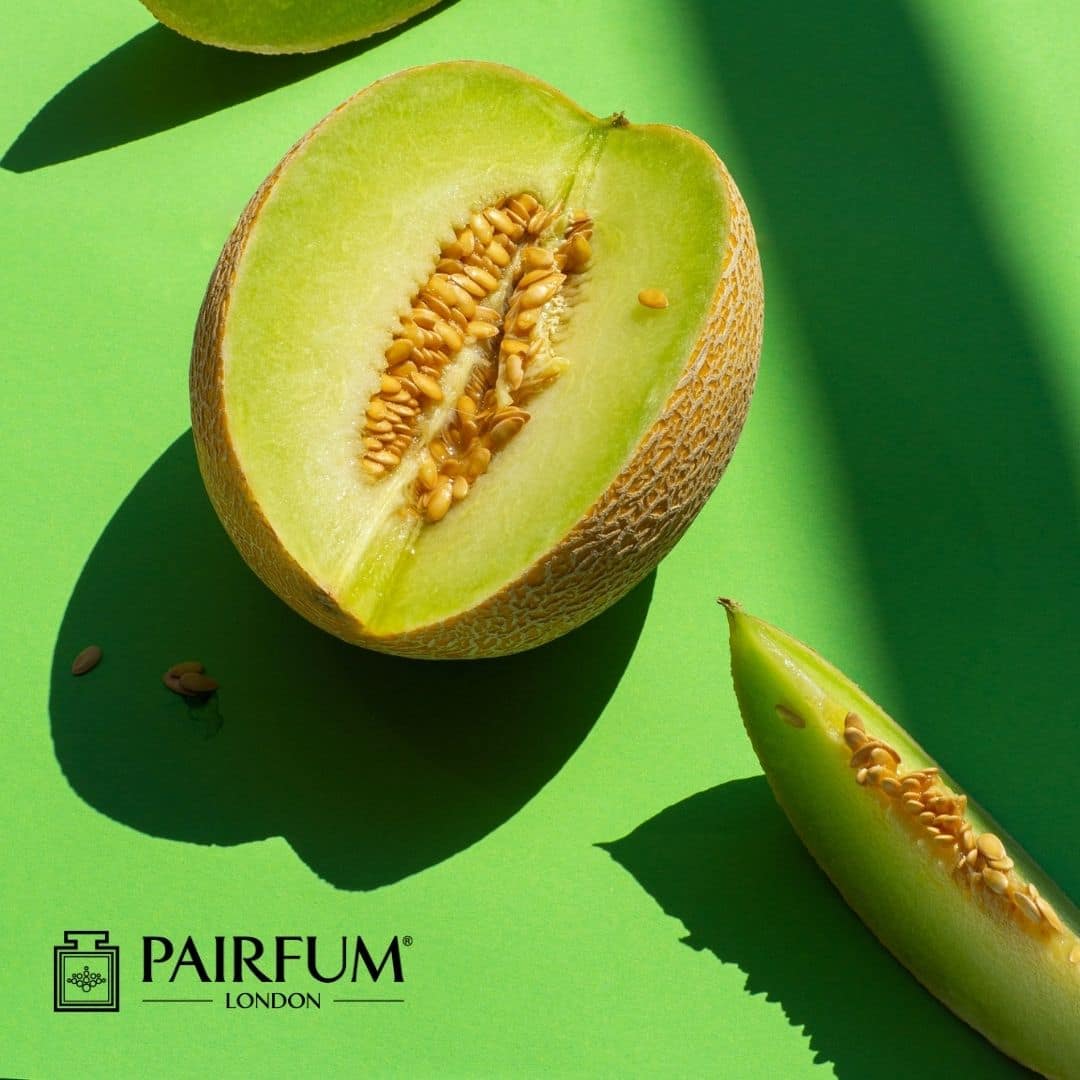
- Honeydew: Honeydew melon has smooth pale skin and light green flesh. Honeydew melons are prized for their clean sweetness and high juice content. This clarity makes honeydew suitable for fresh and watery compositions. The note of honeydew feels calm and restrained.
- Watermelon: Watermelon has crisp red flesh and very high water content. Its scent is light and fleeting, often used to suggest freshness rather than a distinct fruit flavour.
Other references include canary melon with its bright yellow rind, and Charentais melon, which is valued in France for its intense aroma. Persian melons are larger and elongated, while the Santa Claus melon is known for its thick rind and long keeping quality.
In perfumery, melon is recreated rather than extracted. The aim is to suggest fruit water, freshness, and light sweetness without heaviness.
How Melon Is Created for Perfumery
Melon does not produce an essential oil suitable for traditional extraction. Its scent is delicate and closely tied to water, making it impossible to capture through distillation.
Instead, perfumers build a melon impression using aroma molecules. Calone is one well-known material, adding a marine and watery character that recalls fresh fruit and sea air. Fruity aldehydes, lactones, and green notes are layered to suggest the textures of melon flesh.
By adjusting these elements, perfumers can move between the crisp bite of watermelon and the softer creaminess of ripe melon. This flexibility explains why melon continues to appear in modern fragrance design.
Melon’s Role and Pairings in Perfume
Melon rarely dominates a composition. More often, it acts as a connecting note that smooths transitions between accords.
It pairs naturally with cucumber, reinforcing the watery and green aspects of the scent. Other fruit notes, such as pear or apple, can enhance its brightness. Herbs like mint add lift, while soft florals introduce elegance.
Melon also works well with musks and light woods. In this role, it prevents a perfume from feeling dense and keeps the overall structure airy.
Melon in Food Culture and Scent Memory
Our response to melon in fragrance is shaped by how we experience melons as food. A ripe melon releases its aroma as soon as it is cut, signalling freshness through smell alone.
Melons appear in simple dishes such as chilled slices, salad, and fruit salad. A familiar pairing is melon with prosciutto, where sweetness meets salt. Melon also works alongside salty cheese, herbs, or a splash of lime or lime juice to sharpen the taste.
These everyday memories influence how melon is perceived in scent. It suggests hydration, cleanliness, and ease rather than indulgence. Many melon dishes rely on simplicity rather than complex recipes.
Lesser Known Melons and Cultural References
Not all melons are sweet dessert fruit. Bitter melon is valued for its sharp taste and is used in savoury cooking. Its aroma is not associated with fragrance.
Winter melon, despite its name, is harvested in warm months and stored for later use. It has firm flesh and a mild flavour, making it suitable for cooking rather than fresh eating. These contrasts show how broad the category of melons really is.
Melon Day celebrations and agricultural events reflect the importance of melons as a crop. Growers often define the perfect melon by balanced sugar, firm flesh, an intact rind, and a well-developed aroma.
The Santa Claus melon takes its name from its ability to keep into the festive season, linking summer fruit with winter traditions.
Iconic and Niche Perfumes Featuring Melon
Melon had a strong influence during the 1990s, when aquatic fragrances reshaped ideas of freshness. Many of these scents remain well-known.
In niche perfumery, melon is used more quietly. It may appear briefly at the top or sit in the background, adding clarity to unusual structures. This approach reflects a move towards atmosphere rather than obvious fruit notes.
L’Eau d’Issey Pour Homme by Issey Miyake
A landmark aquatic fragrance where melon blends with watery accords and soft woods to create a clean and airy impression.
Escape by Calvin Klein
A fruity floral that uses melon to bring openness and brightness, balancing green notes and flowers.
Cool Water Woman by Davidoff
A fresh floral aquatic where melon supports the crisp top notes and enhances the sense of coolness.

Watery Melon Top Notes In Pairfum London Home Fragrance
For those drawn to the uplifting nature of melon in fragrance, the Snow Crystal Fragranced Candle offers a similar feeling within the home. Its clean scent recalls winter light and gentle sweetness, echoing the watery clarity associated with melon-inspired compositions. It is designed to create space and balance, whatever the season.
Magnolias In Bloom - Classic Snow Crystal Fragranced Candle by Pairfum London
A Spring Flowers accord with a fresh top note of ozone, white flower petals, and a light hint of watery melon. The heart remains floral with magnolia, lily, geranium, rose, and violet, while musks and rosewood form the base.
A Breath of Freshness All Year Round
Although melon is often linked with summer, its role in fragrance extends well beyond warm weather. In cooler seasons, it provides contrast and lightness.
In perfumery, melon is less about sweetness and more about water, air, and light. Across the many species and varieties of melons, from Cucumis melo to Citrullus lanatus, shared qualities of juice and freshness continue to inspire scent creation.
From cantaloupe and honeydew to watermelon and beyond, melons connect agriculture, fruit growing, memory, and fragrance. Their presence in perfume reminds us that scent is shaped by everyday encounters with plant life, taste, and place.
https://www.pairfum.com/melon-in-fragrance-juicy-freshness-with-watery-sweetness/?fsp_sid=14478
#ARTISANPERFUMERSOFLONDON #FRESHFRAGRANCE #FRUITYNOTES #INSTAPERFUME #MELON #MELONFRAGRANCE #MELONSCENT #PERFUMEINGREDIENTS #PERFUMELOVERS


Comments
Post a Comment